Interesting Article from MDLinx

MDLinx  Psychiatry

5 minutes to stay current

Your Article Summary

Long-term safety and efficacy of olanzapine long-acting injection in patients with schizophrenia or schizoaffective disorder: A 6-year, multinational, single-arm, open-label study
International Clinical Psychopharmacology, 06/02/14
McDonnell DP, et al. – The objective of this study was to assess the long–term safety and efficacy of olanzapine long–acting injection (LAI). Olanzapine LAI appeared effective as a long–term maintenance treatment, with a safety profile generally consistent with the known profile of oral olanzapine, except for injection–related events (including post–injection delirium/sedation syndrome).

>> Click here to see the complete list

Carti noi in biblioteca APLR - iunie 2014

Prof.dr.psihiatru Aurel Romila-"90 % din oamenii cu care intru in contact sunt profund nefericiti; Si-au pierdut valorile de bine.frumos,adevar si dreptate"-Lumea romaneasca-Numarul curent-Formula AS



image

Prof. dr. psihiatru Aurel Romila - "90% din oamenii
Prof. dr. psihiatru Aurel Romila - "90% din oamenii cu care intru în contact sunt profund nefericiţi. Şi-au pierdut valorile de bine, frumos, adevăr şi dreptate...

Preview by Yahoo


link pentru descarcarea articolului in format pdf: 
https://app.box.com/s/m3ahmbn4qfmqfjfsrdvb


Dati click pe imaginile de mai jos pentru citire online:


Medscape: Preventing the Onset of Major Depressive ...

Medscape from WebMD - Email This


Preventing the Onset of Major Depressive Disorder: A Meta-analytic Review of Psychological Interventions
International Journal of Epidemiology, 2014-04-01


The British Journal of Psychiatry Table of Contents for 1 June 2014; Vol. 204, No. 6


The British Journal of Psychiatry

Highlights of This Issue

Highlights of this issue
Kimberlie Dean
BJP June 2014 204:A23; doi:10.1192/bjp.204.6.A23


EDITORIALS

Towards a more nuanced global mental health
Ross G. White and S. P. Sashidharan
BJP June 2014 204:415-417; doi:10.1192/bjp.bp.113.139204

Is the DSM-5 chapter on somatic symptom disorder any better than DSM-IV somatoform disorder?
Richard Mayou
BJP June 2014 204:418-419; doi:10.1192/bjp.bp.113.134833


REVIEW ARTICLE

Alterations in cortical and extrastriatal subcortical dopamine function in schizophrenia: systematic review and meta-analysis of imaging studies
Joseph Kambeitz, Anissa Abi-Dargham, Shitij Kapur, and Oliver D. Howes
BJP June 2014 204:420-429; doi:10.1192/bjp.bp.113.132308


PAPERS

Combined effects of physical illness and comorbid psychiatric disorder on risk of suicide in a national population study
Ping Qin, Keith Hawton, Preben Bo Mortensen, and Roger Webb
BJP June 2014 204:430-435; doi:10.1192/bjp.bp.113.128785

Socioeconomic status and survival among older adults with dementia and depression
Ruoling Chen, Zhi Hu, Li Wei, and Kenneth Wilson
BJP June 2014 204:436-440; doi:10.1192/bjp.bp.113.134734

Use of services and associated costs for young adults with childhood hyperactivity/conduct problems: 20-year follow-up
Francesco D'Amico, Martin Knapp, Jennifer Beecham, Seija Sandberg, Eric Taylor, and Kapil Sayal
BJP June 2014 204:441-447; doi:10.1192/bjp.bp.113.131367 OPEN ACCESS ARTICLE

Cannabis and stimulant disorders and readmission 2 years after first-episode psychosis
Grant E. Sara, Philip M. Burgess, Gin S. Malhi, Harvey A. Whiteford, and Wayne C. Hall
BJP June 2014 204:448-453; doi:10.1192/bjp.bp.113.135145

Maintenance cognitive stimulation therapy for dementia: single-blind, multicentre, pragmatic randomised controlled trial
Martin Orrell, Elisa Aguirre, Aimee Spector, Zoe Hoare, Robert T. Woods, Amy Streater, Helen Donovan, Juanita Hoe, Martin Knapp, Christopher Whitaker, and Ian Russell
BJP June 2014 204:454-461; doi:10.1192/bjp.bp.113.137414

Brief psychological intervention after self-harm: randomised controlled trial from Pakistan
Nusrat Husain, Salahuddin Afsar, Jamal Ara, Hina Fayyaz, Raza ur Rahman, Barbara Tomenson, Munir Hamirani, Nasim Chaudhry, Batool Fatima, Meher Husain, Farooq Naeem, and Imran B. Chaudhry
BJP June 2014 204:462-470; doi:10.1192/bjp.bp.113.138370

Comparative efficacy of two interventions to discontinue long-term benzodiazepine use: cluster randomised controlled trial in primary care
C. Vicens, F. Bejarano, E. Sempere, C. Mateu, F. Fiol, I. Socias, E. Aragonès, V. Palop, J. L. Beltran, J. L. Piñol, G. Lera, S. Folch, M. Mengual, J. Basora, M. Esteva, J. Llobera, M. Roca, M. Gili, and A. Leiva
BJP June 2014 204:471-479; doi:10.1192/bjp.bp.113.134650

Efficacy of a triage system to reduce length of hospital stay
P. Williams, E. Csipke, D. Rose, L. Koeser, P. McCrone, A. D. Tulloch, G. Salaminios, T. Wykes, and T. Craig
BJP June 2014 204:480-485; doi:10.1192/bjp.bp.113.141051


SHORT REPORT

Dopamine transporter occupancy by methylphenidate and impulsivity in adult ADHD
Cleo L. Crunelle, Wim van den Brink, Geert Dom, and Jan Booij
BJP June 2014 204:486-487; doi:10.1192/bjp.bp.113.132977


CORRESPONDENCE

Is depression one thing or many?
A. Amerio, A. Odaone, C. Marchesi, and S. N. Ghaemi
BJP June 2014 204:488; doi:10.1192/bjp.204.6.488

CBT for psychosis: not a 'quasi-neuroleptic'
Max Birchwood, David Shiers, and Jo Smith
BJP June 2014 204:488-489; doi:10.1192/bjp.204.6.488a

CBT for psychosis: not a 'quasi-neuroleptic'
Rory E. Byrne
BJP June 2014 204:489; doi:10.1192/bjp.204.6.489

Authors' reply
P. J. McKenna, J. Radua, S. Jauhar, and K. R. Laws
BJP June 2014 204:490; doi:10.1192/bjp.204.6.490

Stimulant treatment for ADHD
Rohit Verma, Apala, Simmi Kumari, and Vishal Dhiman
BJP June 2014 204:490; doi:10.1192/bjp.204.6.490a

Authors' reply
Annabeth P. Groenman, Jaap Oosterlaan, Nanda N. J. Rommelse, Barbara Franke, Corina U. Greven, Pieter J. Hoekstra, Catharina A. Hartman, Marjolein Luman, Herbert Roeyers, Robert D. Oades, Joseph A. Sergeant, Jan K. Buitelaar, and Stephen V. Faraone
BJP June 2014 204:490-491; doi:10.1192/bjp.204.6.490b

Liaison services for older adults
Elizabeta B. Mukaetova-Ladinska and Ann Scully
BJP June 2014 204:491-492; doi:10.1192/bjp.204.6.491

Liaison services for older adults
Matthew Rowett and Itoro Udo
BJP June 2014 204:492; doi:10.1192/bjp.204.6.492

Liaison services for older adults
Mukesh Kripalani
BJP June 2014 204:492-493; doi:10.1192/bjp.204.6.492a

Author's reply
Michael Sharpe
BJP June 2014 204:493; doi:10.1192/bjp.204.6.493

Assessing and staging bipolar disorder
Mark Agius, Jonathan Rogers, Eva Bongards, Stuart O'Connor, Norma Verdolini, and Sandro Elisei
BJP June 2014 204:493-494; doi:10.1192/bjp.204.6.493a

Author's reply
Anne Duffy
BJP June 2014 204:494; doi:10.1192/bjp.204.6.494


CORRECTION

Correction
BJP June 2014 204:494; doi:10.1192/bjp.204.6.494a


TEN BOOKS

Ten books
Gwen Adshead
BJP June 2014 204:495-498; doi:10.1192/bjp.bp.113.135616


BOOK REVIEW

Late-Life Mood Disorders
Kathryn Milward
BJP June 2014 204:499; doi:10.1192/bjp.bp.113.131755


EXTRAS

On Regeneration by Pat Barker - reflection
Sharon Singsit-Evans
BJP June 2014 204:417; doi:10.1192/bjp.bp.113.139238

Dulce et Decorum Est - poem
Wilfred Owen
BJP June 2014 204:461; doi:10.1192/bjp.bp.114.148304

Trauma and memory - in 100 words
Jonathan I. Bisson
BJP June 2014 204:494; doi:10.1192/bjp.bp.112.108571


FROM THE EDITOR'S DESK

From the Editor's desk
Kamaldeep Bhui
BJP June 2014 204:501-502; doi:10.1192/bjp.204.6.501

Editorial Iunie 2014 - Prof.Dr. Aurel ROMILA


Fiti linistiti: a venit RESILIENTA !


 De curind s-a tinut la TIMISOARA  congresul Mondial de resilienta,cu sute de comunicari foarte interesante,cu nume vechi si nume noi, toate trecute brusc pe RESILIENTA. E greu de apreciat cate realitati aduc, dar  ma tem sa nu fie o moda de limbaj. Oricum mai au mult pana la resocializare, care este ignorata pentru ca nu se face cu vorbe. Oricum multumim celor care ne-au transmis rezumatele difuzate in revista.

Prof.Dr. Aurel ROMILA
                                             
                                           Be still: RESILIENCE has come!

Recently in Timisoara took place the World Congress on Resilience, with hundreds of interesting communications, with old and new names, all suddenly turned on RESILIENCE. It’s hard to estimate how many realities they are bringing but I’m afraid that it is only a fashion of language. Anyway, they have a lot up to resocialisation that is ignored because it cannot be made only with words. Anyway, we thank those who sent us the abstracts published in Conference Proceedings.

Prof.Dr. Aurel ROMILA


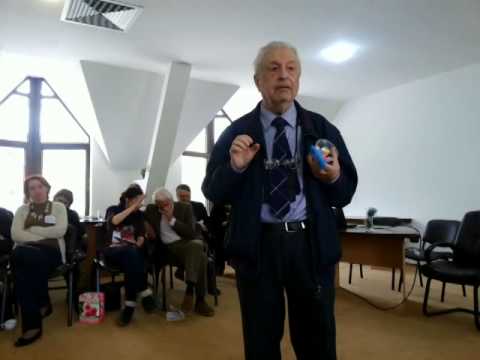
Viitoarea intalnire APLR


SAMBATA 31 MAI 2014, ora 10, la SPITALUL OBREGIA

Intalnirea APLR :  F O R M U L E pentru P S I H O T E R A P I E

                               
TARGET:    EGO-ul

Interesting Article from MDLinx

MDLinx  Psychiatry

5 minutes to stay current

Your Article Summary

Beneficial effect of low-dose mirtazapine in acute aripiprazole-induced akathisia
International Clinical Psychopharmacology, 04/04/14
Poyurovsky M, et al. – The authors evaluated whether mirtazapine is also effective for akathisia induced by the partial dopamine D2 receptor agonist aripiprazole. Low–dose mirtazapine was well tolerated, and mild sedation, the only side effect (three patients), was transient. A large–scale controlled investigation is warranted to substantiate clinical utility of mirtazapine for akathisia induced by aripiprazole and other second–generation antipsychotics.


Receive more summaries like this by joining MDLinx. We provide free daily digests of top journal articles in your field. >> Click here to choose your specialties.

Other articles in Psychiatry

>> Click here to see the complete list

Interesting Article from MDLinx

MDLinx  Psychiatry

5 minutes to stay current

Your Article Summary

Antidepressant-induced liver injury: a review for clinicians
American Journal of Psychiatry, 04/08/14
Voican CS, et al. – The authors review clinical data relevant to antidepressant–induced liver injury and provide recommendations for clinical practice. Although an infrequent event, DILI from antidepressant drugs may be irreversible, and clinicians should be aware of it. Aminotransferase surveillance is the most useful tool for detecting DILI, and prompt discontinuation of the drug responsible is essential. The results of antidepressant liver toxicity in all phases of clinical trials should be available and published. Further research is needed before any new and rigorously founded recommendations can be made.
Methods
  • A PubMed search was conducted for publications from 1965 onward related to antidepressant-induced liver injury.
  • The search terms were "liver injury," "liver failure," "DILI," "hepatitis," "hepatotoxicity," "cholestasis," and "aminotransferase," cross-referenced with "antidepressant."

Results
  • Although data on antidepressant-induced liver injury are scarce, 0.5%-3% of patients treated with antidepressants may develop asymptomatic mild elevation of serum aminotransferase levels.
  • All antidepressants can induce hepatotoxicity, especially in elderly patients and those with polypharmacy.
  • Liver damage is in most cases idiosyncratic and unpredictable, and it is generally unrelated to drug dosage.
  • The interval between treatment initiation and onset of liver injury is generally between several days and 6 months. Life-threatening antidepressant-induced liver injury has been described involving fulminant liver failure or death.
  • The underlying lesions are often of the hepatocellular type and less frequently of the cholestatic and mixed types.
  • The antidepressants associated with greater risks of hepatotoxicity are iproniazid, nefazodone, phenelzine, imipramine, amitriptyline, duloxetine, bupropion, trazodone, tianeptine, and agomelatine.
  • The antidepressants that seem to have the least potential for hepatotoxicity are citalopram, escitalopram, paroxetine, and fluvoxamine.
  • Cross-toxicity has been described, mainly for tricyclic and tetracyclic antidepressants.


Receive more summaries like this by joining MDLinx. We provide free daily digests of top journal articles in your field. >> Click here to choose your specialties.

Other articles in Psychiatry

>> Click here to see the complete list

Interesting Article from MDLinx

MDLinx  Psychiatry

5 minutes to stay current

Your Article Summary

Chlorpromazine versus every other antipsychotic for schizophrenia: A systematic review and meta-analysis challenging the dogma of equal efficacy of antipsychotic drugs
European Neuropsychopharmacology, 05/21/14
Samara MT, et al. – The authors conducted a meta–analysis of randomised controlled trials on the efficacy of chlorpromazine versus any other antipsychotic in the treatment of schizophrenia. They infer that the old antipsychotic drug literature was inconclusive and the claim for equal efficacy of antipsychotics was never evidence–based. Recent meta–analyses on second–generation antipsychotics were in a better position to address this question and small, but consistent differences between drugs were found.
Methods
  • The authors searched the Cochrane Schizophrenia Group's specialized register, MEDLINE, EMBASE, PsychInfo and reference lists of relevant articles.
  • The primary outcome was response to treatment.
  • They also analyzed mean values of schizophrenia rating scales at endpoint and drop-out rates.
  • 128, mostly small, RCTs with 10667 participants were included.

Results
  • Chlorpromazine was compared with 43 other antipsychotics and was more efficacious than four (butaperazine, mepazine, oxypertine and reserpine) and less efficacious than other four antipsychotics (clomacran, clozapine, olanzapine and zotepine) in the primary outcome.
  • There were no statistically significant efficacy differences between chlorpromazine and the remaining 28 antipsychotics.
  • The most important finding was that, due to low numbers of participants (median 50, range 8–692), most comparisons were underpowered.


Receive more summaries like this by joining MDLinx. We provide free daily digests of top journal articles in your field. >> Click here to choose your specialties.

Other articles in Psychiatry

>> Click here to see the complete list

HOME (*Revenire-Pagina la Zi)

MENU

EDITORIAL